.svg)
To Win Against Great Power Competition, Increase Focus and Investment on Autonomous Ground Vehicles


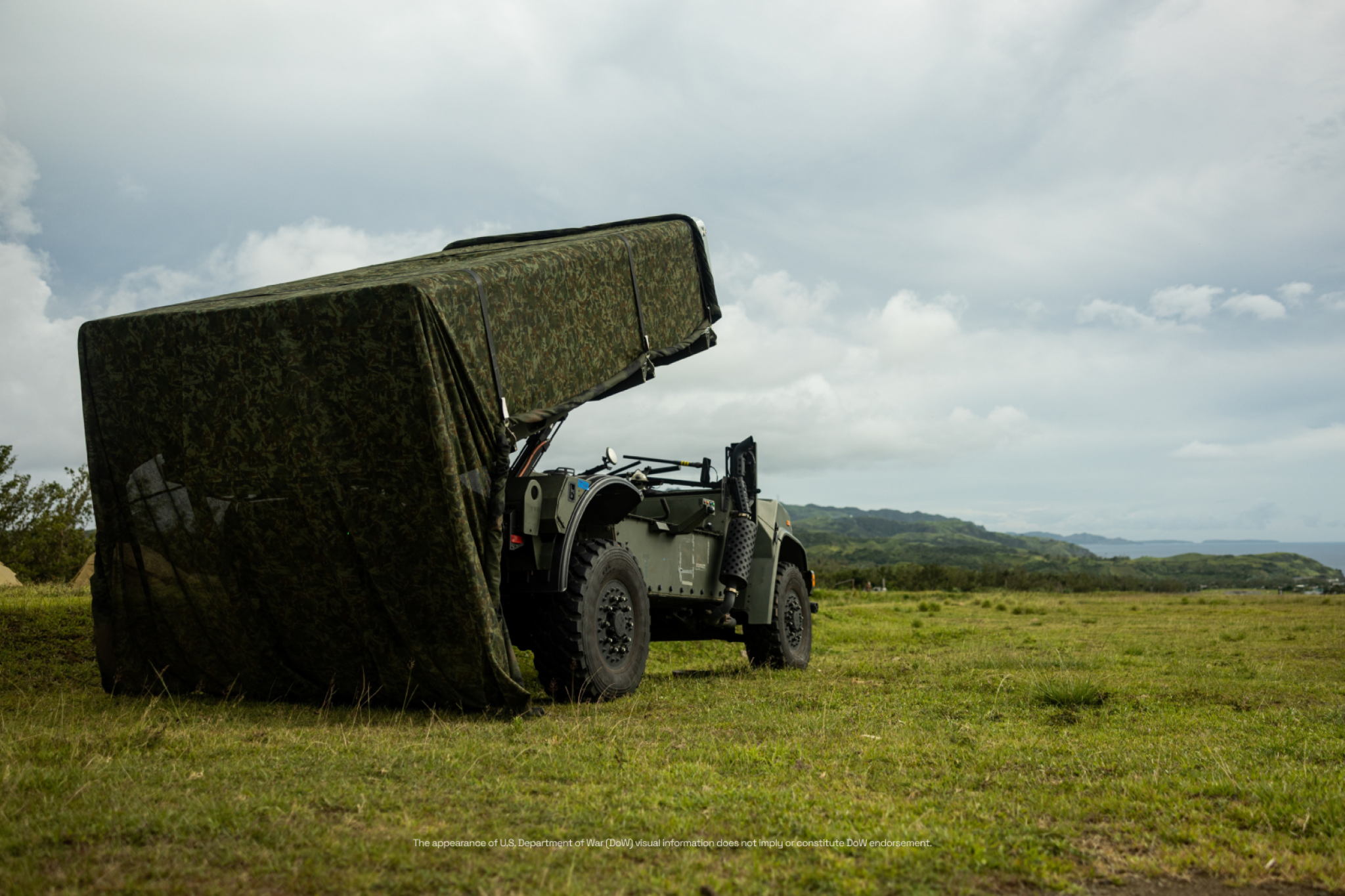
In Part 1 of Forterra’s blog series about the Trump Administration’s request for a $1.5 trillion defense budget, Forterra VP of Strategy Paul Benfield spoke with retired United States Marine Corps Lieutenant General (LtGen.) Mike Dana about why the budget won’t cut it when dealing with the pricey and advanced exquisite airframes and naval vessels needed to confront Great Power Competition. LtGen. Dana explained why some of that money should be going towards researching, developing, and deploying autonomous ground vehicles (AGVs) to help keep pace with peer and near-peer adversaries.
In the second half of their conversation, LtGen. Dana discussed where AGVs are in the development process, what is keeping them from seeing the battlefield, and how long it could take to deploy these systems with the right funding and focus.
Paul Benfield: What roles will AGVs play on the battlefield of the future?
LtGen. Mike Dana: One of the first roles I think of is reconnaissance. These platforms are tailor-made for that mission. Instead of putting soldiers or Marines at the very dangerous pointy end of the fight, you can put a machine there. And in many cases, it can do most of what a human can do in that role without putting lives at risk. That also extends into surveillance - being able to operate deep into contested areas and observe enemy defenses.
Second is logistics. These systems are ideal as logistics haulers. If you look at past conflicts like Iraq and Afghanistan, the “tooth-to-tail” ratio was significant. You had a lot of people dedicated just to sustaining the force. With autonomous systems, you’re removing humans from one of the most dangerous parts of the fight - moving supplies.
And there are real advantages there. Machines don’t get tired. They can operate 24/7. You don’t have to stop every 18 hours so people can sleep. And as you reduce the number of logisticians required, you create an exponential effect - you’re also reducing the number of people you need to feed, water, protect, and sustain. That shrinks the overall logistics burden in a meaningful way.
There’s also a survivability aspect. In Iraq and Afghanistan, you had humans in every vehicle, whether that was Marines in Humvees or civilians in contracted trucks, often without the level of protection they needed. With these systems, again, you’re putting a machine where a human would be. That’s a fundamental shift.
Finally, there are kinetic effects. These systems can carry and deliver weapons, whether that’s rockets, mounted systems, or acting as a weapon themselves. So now you’re not just sensing and sustaining, you’re also generating combat power.
Paul Benfield: Where do you see the military today in terms of investing in and adopting AGVs?
LtGen. Mike Dana: We’ve done a lot of experimentation with different types of drones across multiple domains. But I’d say there’s not great unity of effort and fielding velocity. We’re not there yet.
Across the Departments there are all these disparate efforts, with different groups experimenting with their own version of autonomy. There’s so much going on that it almost becomes sensory overload for decision-makers trying to figure out where we actually are and how to move forward.
Paul Benfield: Aside from the stovepipes, are there other reasons why AGVs are stuck in that experimentation cycle?
LtGen. Mike Dana: The good news is AGV technology is maturing and proving to be very capable. Those in capability development arena are truly trying to bring the best platform (s) to the warfighter. That said, from my logistics foxhole, I will gladly take a fleet of "good enough" unmanned vehicles that can carry and move sustainment on today's high threat, multi-domain battlefield.
What we should be doing is taking some of the proposed $1.5 trillion defense budget and putting it behind the things that are already working. If a program is showing success, put some real momentum behind it. If something like robotic combat vehicles or autonomous transport systems is proving out, then scale it.
Don’t wait three to five years. Let’s put some jet fuel behind it and accelerate delivery.
Paul Benfield: Where does AGV technology stand today in terms of maturity? Have these systems been field-tested by the services, and what still needs to be proven before they’re ready for operational deployment?
LtGen. Mike Dana: They’re much more mature than people give them credit for. We had companies running automated Stryker convoys in Afghanistan over a decade ago. So, the technology isn’t the issue.
What’s missing is scale. We need more of these systems fielded so we can really work through integration and deconfliction. Right now, a lot of these platforms are still in prototype or experimentation phases. But the reality is, we’re not going to operate just one or two of these; we’re going to operate many of them across the battlefield at the same time.
So technologically, they’re very mature. What we still need is to put more of them out there and test full integration in real operational environments.
In terms of what you want in the platform, it needs to be able to operate in a GPS-denied environment. It needs to be all-weather, all-terrain. Ideally, it has an extended range so you’re not constantly refueling or recharging. This is what’s necessary on the battlefield.
But I think this also gets at why it’s taken so long to get here. There’s been a tendency to look for the perfect system that checks every box. In reality, you’re probably going to have to accept some trade-offs to get capability fielded faster.
Paul Benfield: If investment and focus on AGVs increase, and we begin fielding and testing these systems at scale, how soon could they start playing a meaningful role on the battlefield?
LtGen. Mike Dana: On the industry side, it could happen almost overnight with the right funding. A lot of these companies already have the technology they just need the resources to scale.
I think a good model to look at is Ukraine. There was a New York Times Magazine article a few months back that talked about how they built a domestic drone production capability while under fire. And these aren’t all high-end systems. They’re often low-cost, “good enough” solutions. But that’s the key point: you start with good enough, and then you improve over time.
If they can do that under those conditions, we can absolutely do it. It just requires the right level of investment and a push from the top. We’ve done this before.
Look at MRAPs in Iraq. We had Marines and soldiers getting killed by IEDs, and there was an urgent need for better protection. The MRAP program moved at what I’d call warp speed and it fielded capability quickly because the need was clear and the priority was there.
We could take that same approach here. The technology already exists. You can see it in the commercial space - I’ve been out in places like Phoenix, where you’ve got autonomous vehicles operating every day, moving from point A to point B with no driver. That’s real, and it’s happening now.
It’s not a question of whether the technology is ready; it’s about industrializing it for military use. With the right resources and urgency, these systems could start playing a meaningful role very quickly.
OTHER NEWS
Forterra Secures Spot as the Systems Integration Partner for U.S. Army's Joint Readiness Training Center’s Unmanned Systems Program
rEAD ARTICLE →
%201.png)
Forterra Debuts OASIS-OneLink, an Open Communication Architecture Built to Connect Autonomous Military Systems
rEAD ARTICLE →