.svg)
AGVs: The Future of Minelaying and Terrain Shaping


AGVs: The Future of Minelaying and Terrain Shaping
Four years ago, when Russia first began its advance into Ukraine, western intelligence agencies and experts anticipated that the invasion would last for a few days before the nation fell to what was undoubtedly a more advanced, better-equipped, and larger Russian military force. That is not exactly how the war in Ukraine has played out.
The Russian advance on Kyiv was halted, and the war has devolved into what appears to be a stalemate entering its fifth year. In fact, CBS News recently reported the Ukrainian Army reclaimed more than 230 square miles from Russia in 2026 alone. Additionally, the former director the Defense Intelligence Agency indicated that “Ukraine is winning in the context they are defeating enemy operational objectives, creating conditions for follow-on operations and preserving freedom of action.”
In our last article we introduced the concept of terrain shaping and its evolution over time. We explored the disparate tools, strategies, and systems that could be considered part of modern terrain shaping operations – including electronic warfare (EW), unmanned aerial systems (UAS), and autonomous ground vehicles (AGVs).
But if the war in Ukraine has taught us anything, it’s that the landmine remains one of the most effective tools for controlling enemy movements and deterring enemy maneuver and advancement—not that this should be a shock to a US military that battled in improvised explosive device threat for over two decades during the Global War on Terror. Global militaries have been watching the war in Ukraine closely to learn more about modern military technologies and their potential impact on the battlefield. The low-tech, traditional landmine appears to be playing an outsized role for both sides in the conflict.
Chinese military analysts attribute much of Russia’s stalled early offensive to the damage that Ukrainian minefields inflicted on Russian armored vehicles. Russian minefields were also credited with disabling Ukrainian tanks and armored mine-clearing vehicles early in the conflict. This shows how important a weapon that first appeared on battlefields during the American Civil War remains in modern conflicts.
This is why the U.S. Army and the larger U.S. Department of War (DoW) are currently evaluating their mine and mine-laying technologies and seeking ways to make mines and mine-laying operations smarter, more effective, and safer.
Developing a Next-Gen Mine
As a result of past conflicts and the current war against Russia, Ukraine is now one of the most mined places on Earth, with more than 20 percent of its land at risk for contamination from mines. This will be a problem that extends far past the end of the war with Russia. Worse, it’s a problem that will impact civilians far more than it impacts soldiers—this problem with legacy mines is not unique to Ukraine.
A 2025 article by the International Committee of the Red Cross (ICRC) illustrates how landmines and other unexploded ordnance cast a shadow over countries for decades after conflicts. “While casualty numbers fluctuate, the pattern of harm remains unchanged,” the article says. “Civilians – the very people who should be protected from war’s effects – continue to bear the brunt, making up over 80 per cent of mine and explosive remnants of war casualties, with nearly half being children.”
It’s easy to understand why. Mines are hard-to-identify explosive devices that are intended to catch unsuspecting adversaries by surprise. Even when nations make an earnest attempt to remove them after conflicts, many can be forgotten or lost and remain in the ground. This is why the U.S. Army is looking to identify a smarter mine – one that can be remotely activated, deactivated, or detonated to help minimize civilian casualties after conflicts have ended.
Developing a better, smarter landmine is essential. It’s necessary to enable modern terrain shaping operations while still protecting civilians in the future. But the Army simply cannot afford to develop a new, smarter landmine in a vacuum without considering the systems that will emplace those mines at relevant operational distances.
…And a Next-Gen Mine Layer
These operations are only effective when conducted in the locations where the adversary will be maneuvering. Those areas will inevitably be under heavy surveillance and reconnaissance by the adversary, and any terrain shaping engineers and systems will undoubtedly be observed.
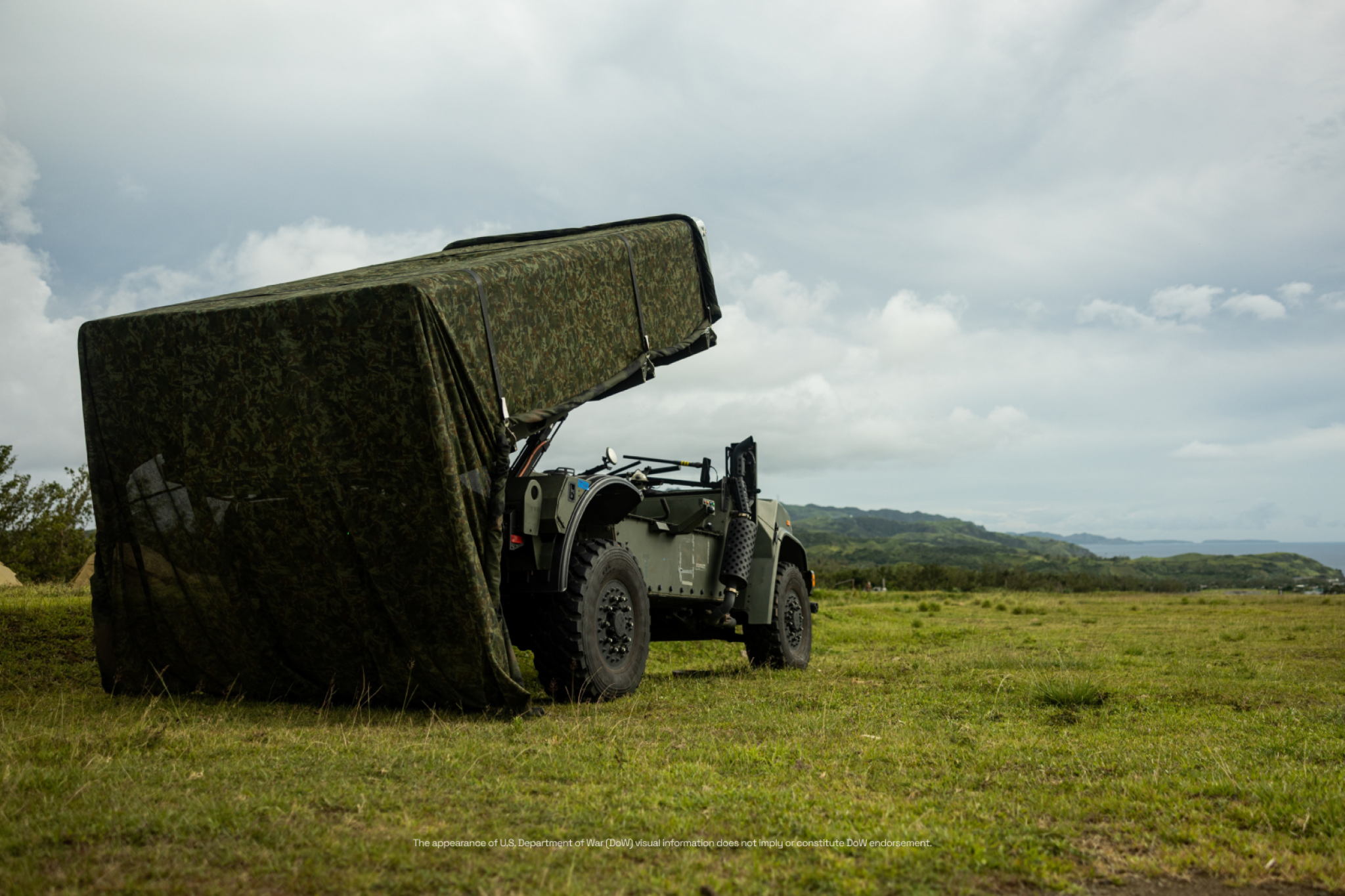
This is why autonomous ground vehicles (AGVs) are an ideal solution for future terrain shaping and mine-laying operations – they can operate in high-risk areas without endangering human Soldiers. They can also carry heavier payloads than UAS, operate autonomously for longer periods, and do not require an active network connection to pilot.
AGVs are the future of terrain shaping and mine-laying, but only if the Army's autonomous minelayers integrate natively with the Army's next-generation landmine. Together, the landmines and minelayers form a “system of systems” that is only effective if they can integrate and interoperate.
For example, if this next-generation of autonomous minelayer developed for the Army has payload size constraints, it may not be able to physically accommodate the next-generation landmine. It may not be designed to hold as many mines as are needed to accomplish the mission. It may also have connectivity or power requirements that make it impractical to emplace and control.
If the next-generation landmine is not developed in conjunction with the next-generation autonomous minelayer, the Army is inevitably creating an integration problem in the future – one that could impact its ability to conduct effective terrain shaping against peer and near-peer adversaries.
For example, look at the Zumwalt-class destroyer. This next-generation Navy vessel was designed with guns that required highly advanced, specialized ammunition. Unfortunately, that ammunition cost approximately $1 million per round to manufacture, making it impractical for the military to operate. When the program to manufacture its specialized ammunition was canceled, the Navy attempted to fire other types of ammunition manufactured by industry and coalition partners, but these efforts also failed, leaving the Navy with no compatible ammunition. This has resulted in the three Zumwalt-class destroyers that were manufactured having to undergo costly retrofits to accommodate hypersonics.
The Army can avoid a costly misstep like the Zumwalt by designing and developing the next-generation landmine and minelayer together. But for this to work effectively, they’ll need the right industry partners.
Experience and Relationships Matter
The next-generation minelaying AGV must combine best-in-class autonomy with the ability to distribute smart mines over operationally relevant areas without human guidance. There are numerous innovative capabilities that will be integrated into this new platform, and the Army should seek to work with industry partners that are qualified to lead the charge.
Here are three important considerations that will be essential when evaluating industry partners for the development of this next-gen minelayer:
- A history of deploying autonomous systems to the battlefield: There are many established industry partners that have developed legacy ground vehicles and weapons systems for the Army. But many of those companies have only a theoretical understanding of what it takes to deploy autonomy to the chaotic, austere, and rapidly changing environments on a modern battlefield.
Because of this, experience beyond simply designing and testing autonomous ground systems is required. The industry partner selected to develop the next-generation minelaying AGV should have experience in deploying effective autonomous systems to the battlefield.
- Experience with minelaying systems: Often, minelaying systems are modular systems that can be integrated into and deployed onboard numerous different vehicles and platforms. In fact, the M136 Volcano Vehicle-Launched Scatterable Mine System has variants that can be deployed on trucks and on aircraft.
The next-generation landmine and minelaying system will most likely be very similar.
Integrating numerous disparate systems together has long been a challenge across the military. Any industry partner selected to develop a minelaying AGV should have experience successfully integrating existing minelaying systems – including the Volcano - into AGVs. This ensures they have the knowledge and expertise needed to make the disparate systems work together seamlessly.
- The ability to work as a team: The next generation landmine, minelaying system, and minelaying AGV need to be designed and developed together as a “system of systems.” It’s the only way to ensure the entire package works together, meets mission requirements, and provides a seamless, easy user experience.
Any partner chosen to develop the next-generation minelaying AGV should have the proven ability to play well with others. They should also be able to deploy open systems that can integrate and interoperate seamlessly with payload providers.
Terrain shaping is an essential part of modern warfare, and landmines remain among the most effective devices for influencing the movement and maneuver of adversaries. But the mines of the past clearly need upgrades if they’re going to meet the requirements of the missions without endangering civilians.
While the Army is developing and evaluating the next-generation landmine, they also must think about designing and developing the vehicles that will lay those mines in the future. AGVs are the most effective choice – capable of conducting terrain shaping operations with appropriate depth, duration, and optionality.
But for everything to work together seamlessly, the landmines, minelaying systems, and minelaying AGVs need to be developed together to ensure integration and interoperability. It’s the only way to avoid integration problems and cost overruns in the future and ensure effective terrain shaping operations against the peer and near-peer adversaries of tomorrow.
To read more and stay up to date with latest from Forterra, visit forterra.com/news.
OTHER NEWS
Forterra Secures Spot as the Systems Integration Partner for U.S. Army's Joint Readiness Training Center’s Unmanned Systems Program
rEAD ARTICLE →
%201.png)
Forterra Debuts OASIS-OneLink, an Open Communication Architecture Built to Connect Autonomous Military Systems
rEAD ARTICLE →