.svg)
The Edge Is Not a Network Problem. It Is an Architecture Problem.


The Edge Is Not a Network Problem. It Is an Architecture Problem.
By Pat Acox, Vice President of Defense, Forterra
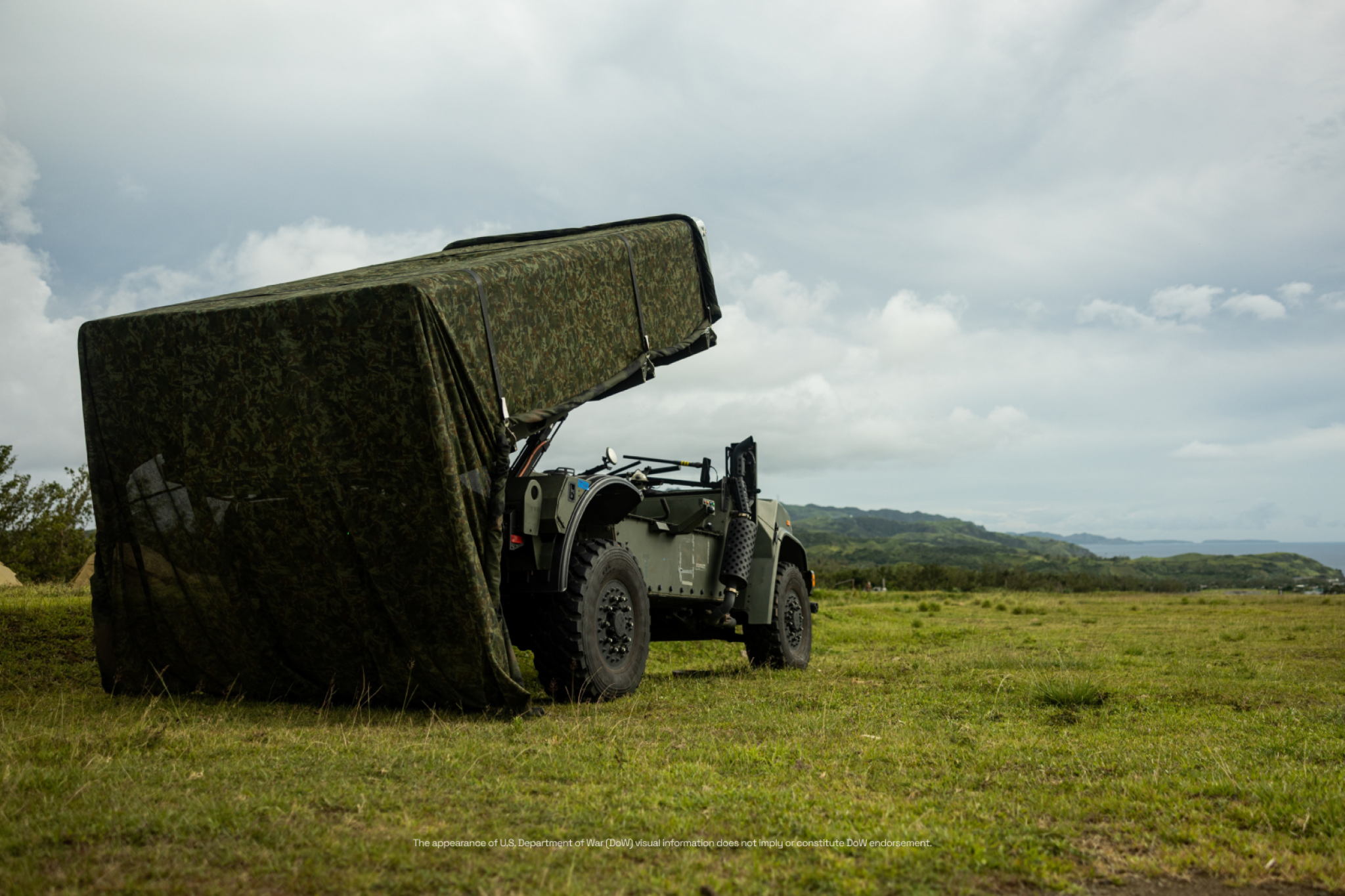
Forterra wrapped up the first week of June with two major milestones, using a single architectural foundation. First was its role alongside Oshkosh Defense in securing the U.S. military’s first large-scale production contract for ground vehicle autonomy through the U.S, Marine Corps’ ROGUE-Fires Block 2 production award. Second, Forterra completed Operation Jailbreak Sprint 1 at Fort Carson, meeting every integration objective the Army set and reaching the agentic workflow validation tier, the highest level in the Army’s grading framework.
And while both milestones were the result of two separate programs and services, both relied on one core technology.
That’s not a coincidence. It’s the framework of Forterra’s autonomy.
Two Programs. One Reality.
The Marine Corps chose ROGUE-Fires for distributed long-range precision fires missions in GPS-denied environments. The Army built Operation Jailbreak around the problem that systems requiring weeks of custom engineering to communicate with each other are not fast enough for the fight.
Both programs are based on the same operational reality. The edge is contested, disconnected, and unforgiving of architectures that assume persistent connectivity. Autonomous systems that depend on a network that cannot guarantee persistent connectivity fail when they are needed most.
Forterra has supported units during real world operations and training for years, and I’ve been fortunate to be part of that work. Environments that we build for don’t require communication networks that remain operational when the network degrades, when a new asset arrives without warning, or when the commander needs to task something that was not in the original integration plan.
War isn’t perfect. Combat zones aren’t predictable. Strategies can’t be rigid. That lack of predictability is what shapes what Forterra builds. Across every program, across every platform, the answer is the same: the architecture has to survive the edge on its own terms.
Why Another Network Is Not the Answer
A common question amongst the defense acquisition community right now is how to command, coordinate, and observe autonomous systems at scale. The answer that keeps surfacing is to build an entirely separate network for autonomous systems. That’s entirely wrong. A separate autonomous systems network won’t solve the integration problem. It’ll only recreate it at a different layer.
The Army's own Jailbreak documentation identified the core failure mode: each new system currently requires weeks or months of custom engineering to communicate with everything else. A siloed autonomy network adds a new integration boundary between the autonomy layer and the C2 architecture commanders already use. It introduces a central authority that becomes a single point of failure in denied or disrupted conditions. And it means every platform that joins has to integrate twice, once into the autonomy network, once into the broader operational picture.
The solution isn’t to pile on another network. It’s to create an integration architecture that takes C2 commanders already in use and helps them identify, task and track autonomous systems without custom engineering each time a new platform arrives.
That is exactly what Forterra builds. It’s what ROGUE-Fires Block 2 delivers to the Marine Corps, and what Jailbreak validated against the Army's own criteria.
What Jailbreak Proved
Operation Jailbreak was not a demonstration. It was a graded validation event, run by the Army Software Factory, against explicit Army-defined criteria.
Forterra completed all four sprint stages: documentation, connectivity, data streaming, and asset management via open interface. Bidirectional data flow between Forterra's mission system and Anduril Lattice for Air Defense was validated. Assets connected through Forterra's architecture became discoverable and taskable from within Lattice, and Lattice-originated commands flowed back into the Forterra network. Interactive API documentation is live on the Army's API Marketplace today.
The integration reached the agentic workflow tier, where Forterra's interface executes as a tool call within an autonomous workflow, without Forterra engineers in the loop. The Army Software Factory confirmed the interface works for systems that were never present at Fort Carson. The result wasn’t theoretical. During the event, Army evaluators confirmed that Forterra’s open interface integrated a previously unseen system in just 45 minutes. When new integrations can typically require months of custom engineering, Forterra’s capabilities demonstrated exactly what Operation Jailbreak was designed to prove: autonomous system integrations shouldn’t have to start from scratch every time.
Forterra did not build a custom Lattice connector. The open interface was exposed using government-preferred formats and Lattice consumed it natively. That distinction matters: a custom connector is a point integration that expires when the program changes. An open interface is reusable across programs, services, and platforms the Army has not yet acquired.
The Principles That Connect Both Programs
ROGUE-Fires Block 2 and Jailbreak are different programs serving different services solving different problems, but underneath it all, the same principles govern both. Discovery and tasking happen at the edge without a persistent central authority. Data moves only when it changes, not because a system is present. Interfaces are open and documented so any conforming platform can join without the need for custom engineering. The architecture survives degraded and disconnected conditions because it was designed for those environments.
The principles upon which Forterra’s work is based came from years of working directly alongside the units that operate in those conditions, like training centers, joint exercises, and environments where integration failures can carry deadly consequences. What Forterra builds is a direct reflection of that proximity. The architecture is the accumulated answer to questions Soldiers and Marines have been asking for years. This architecture enables autonomous platforms to bring weapons and sensors to the next fight, so Soldiers and Marines do not have to.
What This Means Going Forward
The Army is designing the architecture that will govern how autonomous systems integrate across the force. The Marine Corps just awarded the first large scale production contract for ground vehicle autonomy. Both services are asking the same question: which vendors have running systems built for the operational environment, with open interfaces that scale beyond a single program?
Forterra's answer is on record, at Fort Carson in the API Marketplace. In ROGUE-Fires Block 2 vehicles delivering to the Marine Corps through 2031.
The edge is not a network problem. It is an architecture problem. Forterra has been building the answer to it for years. Last week, two programs proved it.
*Pat Acox is Vice President of Defense at Forterra. Forterra builds ground autonomy and mission systems for the U.S. military and allied partners. Learn more at forterra.com.
OTHER NEWS

Forterra Selected as Prime Contractor for U.S. Army's Engineer Autonomous Breaching Capability Program
rEAD ARTICLE →
Forterra to Support U.S. Army Push to Modernize Infantry Last Tactical Mile Operations
rEAD ARTICLE →