.svg)
The enemy still has a map; why terrain shaping is making a comeback


In May 1940, French commanders believed the Ardennes Forest would slow any German attack long enough for defenses to organize. The terrain was considered too dense for large-armored formations. German forces proved otherwise. Panzer divisions pushed through narrow forest roads, bypassed prepared defenses and reached the Meuse River before Allied forces could react. Within days, the German breakthrough shattered the Allied front and opened the road to Paris.
The lesson was not simply about armor or speed. It was about terrain. The ground that one side assumed would constrain maneuver became the avenue that enabled it.
Throughout military history, terrain has shaped the course of conflict. From Thermopylae to the Ardennes to the Strait of Hormuz, it informs planning, constrains maneuver, and often determines outcome. On the modern battlefield, terrain has only become more complex with persistent ISR and contested EW space. These added complexities highlight the need for autonomous systems to shape terrain effectively.
Modern Terrain Shaping Complexities
Near-peer adversaries increasingly rely on layered ISR, low cost drones, electronic warfare, and precision fires to create a transparent battlefield. Persistent ISR collapses concealment. Precision fires punish mass. Electronic warfare degrades coordination and tempo. Effective shaping operations reduce risk to friendly forces by disrupting enemy sensing and targeting. They buy time by slowing maneuver corridors and forcing adversaries to re-plan. And they increase adversary cost by imposing friction, uncertainty, and delay at every step of movement. Through blocking, fixing, turning, and disrupting the enemy at will, effective terrain shaping changes the rules of the game. It creates an unfair advantage for militaries that master it.
But shaping must now occur deeper, faster, with greater control and with less signature than legacy methods allow.
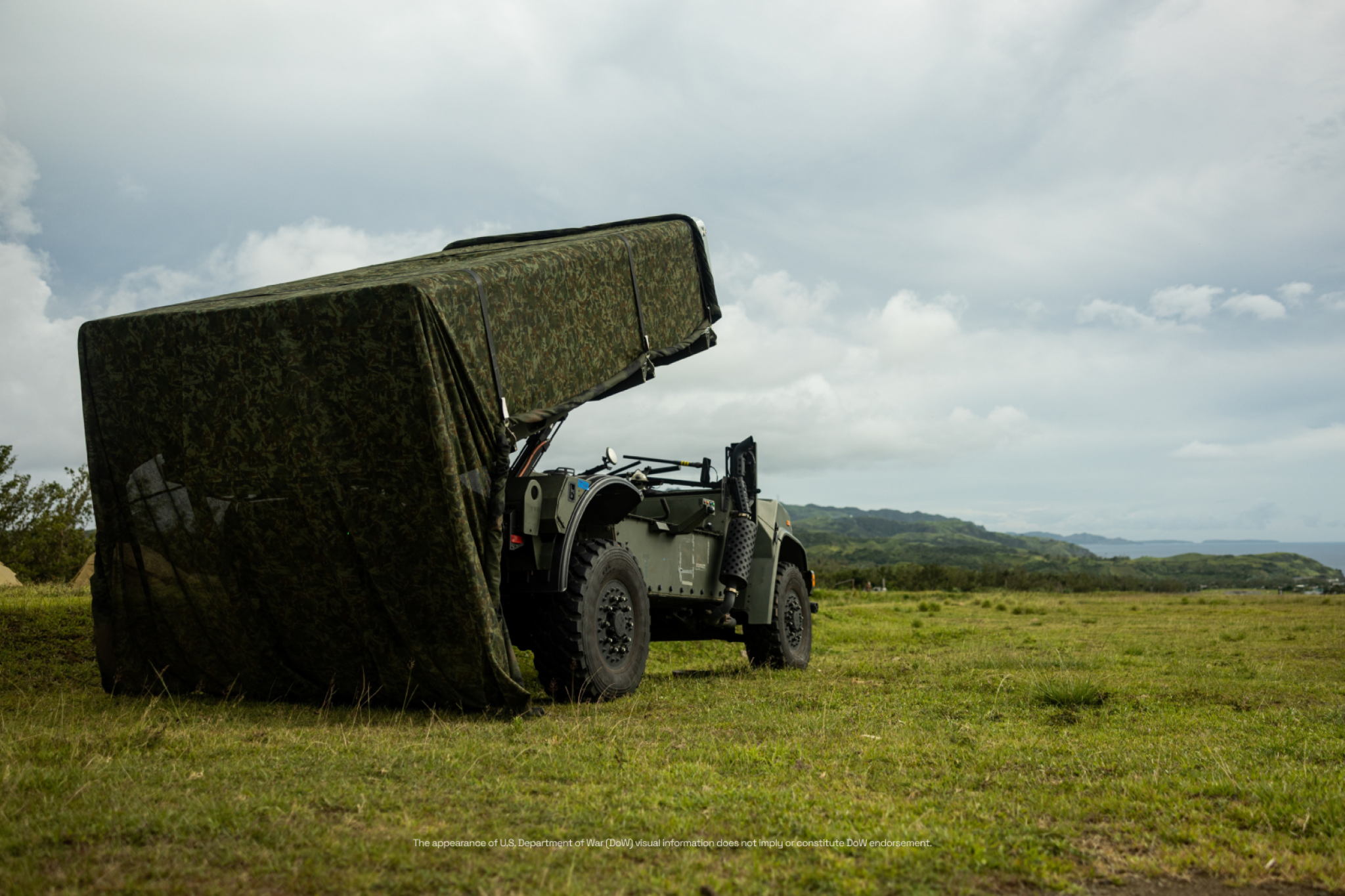
Autonomous ground vehicles extend terrain shaping forward in both space and time. They can conduct persistent reconnaissance, emplace or reduce obstacles, resupply sensors and effects, and maintain presence inside contested areas without exposing personnel. More importantly, they allow shaping operations to become dynamic and situational rather than episodic and static.
In Ukraine, a 40-kilometer “no man’s land” has emerged where traditional maneuver is immediately punished. That space is not empty. It is actively shaped, physically, digitally, and electromagnetically. Any future conflict will feature similar contested zones. Shaping terrain in that environment with traditional methods requires exposing Soldiers inside the enemy’s engagement zone and concentrating large, high-signature formations.
Autonomous systems offer another path.
Terrain Shaping in Depth with Persistence and Optionality
Attritable autonomous ground systems can deliver UAS and loitering munitions deep into contested terrain, where they can lie dormant until activated by time-based or event-based triggers. This enables the creation of autonomous robotic engagement areas, disrupting adversary maneuver before it fully develops and exploiting the element of surprise.
Autonomous platforms can operate longer than human crews. They can accept higher exposure. They can scale in numbers. And because they are attritable, commanders can employ them aggressively without incurring disproportionate human cost.
This changes the calculus. Risk shifts from personnel to platforms. Tempo increases. Adversary cost rises. Defensive shaping imposes delay, canalizes movement, and creates engagement areas that multiply the effectiveness of fires. In a transparent battlefield, defensive terrain shaping must occur early, at range, and without exposing Soldiers to prolonged signature.
Traditional counter-mobility methods depend on time and survivable access to terrain. Obstacle belts constructed with heavy equipment. Barriers positioned along predictable avenues of approach. These methods assume engineers can operate forward long enough to complete the task. That assumption is increasingly fragile.
Autonomous ground systems enable defensive shaping in depth.
Rather than relying on fixed, pre-planned obstacle belts, commanders can establish autonomous shaping layers that adapt to enemy movement. Obstacles can be emplaced based on sensor triggers. Engagement zones can be activated when adversary formations enter specific terrain corridors. Denial becomes continuous rather than episodic.
This changes the nature of engagement areas.
Terrain shaping, executed autonomously and at range, preserves combat power while forcing the enemy to fight through friction they did not anticipate. It also grants commanders greater discretion in the employment of these battlefield effects, greatly reducing risk to friendlies and civilians.
Shaping the Future Fight
Terrain shaping has always influenced the outcome of war. What has changed is the cost of doing it poorly. When terrain is left unshaped, the enemy has more options to create dilemmas for friendly forces.
The future of terrain shaping will not rely on brute force or prolonged exposure inside contested zones. It will rely on systems that can operate forward, persist under observation, and impose friction without unnecessarily exposing Soldiers. Autonomous ground vehicles are a critical component of that shift.
Explosive hazards remain one of the most effective tools our military uses in terrain shaping operations. In Part 2 of this series, Forterra’s Head of Growth, Sustainment and Shaping Operations Philip Cotter, will explain how the DoW is developing a new generation of landmines that are safer to deploy and help avoid civilian casualties, and will explore the role AGVs play in that next-generation mine-laying system.
OTHER NEWS
Forterra Secures Spot as the Systems Integration Partner for U.S. Army's Joint Readiness Training Center’s Unmanned Systems Program
rEAD ARTICLE →
%201.png)
Forterra Debuts OASIS-OneLink, an Open Communication Architecture Built to Connect Autonomous Military Systems
rEAD ARTICLE →